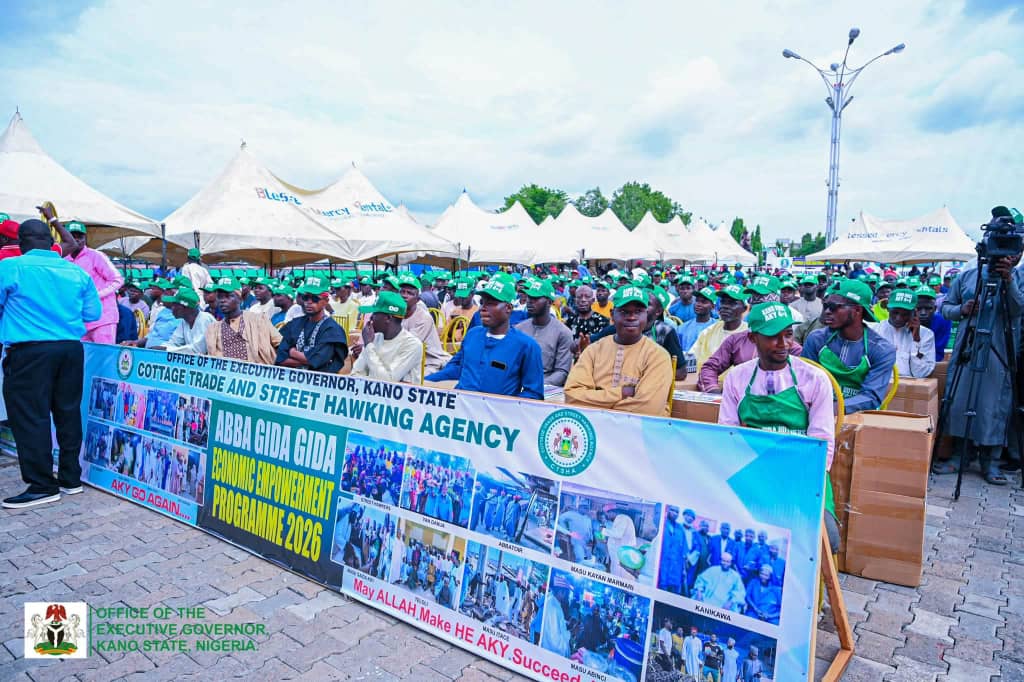
Butchers Empowerment Programme by His Excellency Alhaji Abba Kabir Yusuf,
Butchers Empowerment Programme by His Excellency The Executive Governor of Kano State, Alhaji Abba Kabir Yusuf: Driving Economic Growth and Improving Living Standards in Kano State
The Butchers Empowerment Programme, initiated by *His Excellency, Alhaji Abba Kabir Yusuf, Executive Governor of Kano State, and implemented through the **Kano State Cottage Trade and Street Hawking Agency, under the leadership of its *Director-General, Alhaji Abubakar Ahmed Bichi, represents a landmark initiative aimed at strengthening the State’s informal economy and improving the livelihoods of thousands of citizens.
The programme, which empowered 1,900 butchers across the 44 Local Government Areas of Kano State, involved the distribution of modern working tools and equipment to beneficiaries. This strategic intervention reflects the administration’s commitment to promoting entrepreneurship, creating sustainable sources of income, and supporting small-scale businesses that form the backbone of Kano’s economy.
The Role of the Cottage Trade and Street Hawking Agency
The Kano State Cottage Trade and Street Hawking Agency has continued to play a pivotal role in implementing government policies designed to empower artisans, traders, and other operators within the informal sector. Under the able leadership of Alhaji Abubakar Ahmed Bichi, the Agency has demonstrated its commitment to translating the vision of Governor Abba Kabir Yusuf into practical programmes that directly impact the lives of ordinary citizens.
The successful execution of the Butchers Empowerment Programme highlights the Agency’s dedication to fostering economic inclusion, reducing poverty, and promoting sustainable business development across Kano State.
Strengthening the Internal Economy
The livestock and meat processing sector remains one of the largest contributors to Kano State’s commercial activities. By equipping butchers with modern working tools, the programme is expected to:
• Increase productivity and operational efficiency.
• Improve the quality and hygiene of meat processing.
• Reduce operational costs for butchers.
• Encourage business expansion and sustainability.
• Strengthen local markets and commercial activities.
• Stimulate growth within the informal sector.
As butchers become more productive, the economic benefits extend beyond individual businesses to livestock dealers, transporters, feed suppliers, leather processors, retailers, and other participants within the livestock value chain.